
Cold weather can make starting a vehicle more difficult, especially in places like Anchorage where winter temperatures often drop well below freezing. Many drivers notice their car struggling to start on cold mornings and wonder why this happens.
When temperatures drop, several vehicle systems can be affected. Cold weather can reduce battery performance, thicken engine oil, and place extra strain on the starting system. Understanding the reasons behind this issue can help drivers prevent starting problems during the winter months.
How Cold Weather Affects Your Vehicle
Low temperatures change how fluids and electrical systems behave inside a vehicle. Engine components require more energy to move, and electrical systems must work harder to start the engine.
Cold weather commonly affects:
• Battery performance
• Engine oil viscosity
• Fuel system efficiency
• Starter motor operation
• Electrical connections
When these systems are under stress, your vehicle may crank slowly or struggle to start.
Common Reasons Cars Struggle to Start in Cold Weather
Weak or Aging Battery
The most common reason vehicles struggle to start in cold weather is a weak battery. Batteries rely on chemical reactions to generate electricity, and those reactions slow down when temperatures drop.
In extremely cold conditions, a battery can lose a significant amount of its starting power. If the battery is already aging or partially worn, it may not provide enough energy to start the engine.
Drivers may notice slow cranking, dim dashboard lights, or repeated attempts needed to start the vehicle.
Thickened Engine Oil
Cold temperatures cause engine oil to become thicker. When oil thickens, it does not flow as easily through engine components.
This increased resistance forces the starter motor to work harder to turn the engine. In very cold conditions, the engine may struggle to rotate until the oil warms slightly.
Using the correct oil recommended for cold climates can help reduce this problem.
Fuel System Issues
Cold weather can also affect the fuel system. Moisture inside the fuel lines may freeze, which can restrict fuel flow to the engine.
When fuel cannot move freely through the system, the engine may crank but fail to start properly.
Drivers in extremely cold regions sometimes use fuel additives designed to help prevent fuel line freezing.
Starter Motor Problems
The starter motor is responsible for turning the engine during ignition. Cold temperatures place additional strain on this component because the engine requires more effort to rotate.
If the starter motor is already worn, cold weather may cause it to struggle even more. Drivers may hear clicking sounds or experience slow engine cranking when attempting to start the vehicle.
Faulty Spark Plugs
Spark plugs ignite the fuel-air mixture inside the engine cylinders. When spark plugs become worn or dirty, they may struggle to ignite the mixture effectively, especially during cold starts.
Cold weather increases the demand on the ignition system, which can make spark plug problems more noticeable.
Replacing worn spark plugs can improve starting performance during winter months.
Signs Your Vehicle Is Struggling With Cold Starts
Drivers experiencing cold weather starting problems may notice several warning signs.
Common symptoms include:
• Slow engine cranking when starting
• Multiple attempts needed to start the engine
• Clicking sounds when turning the key
• Dim lights during engine startup
• Engine starting normally after several tries
If these issues occur frequently, the starting system should be inspected.
Why Cold Start Problems Are Common in Anchorage
Anchorage experiences long winters with freezing temperatures that can place significant strain on vehicles. Extended exposure to cold conditions can affect batteries, fluids, and electrical systems.
Drivers who park their vehicles outdoors overnight may notice more severe starting difficulties compared to vehicles kept in heated garages.
Because of these conditions, regular maintenance is especially important for vehicles operating in cold climates.
How Mobile Mechanics Diagnose Starting Problems
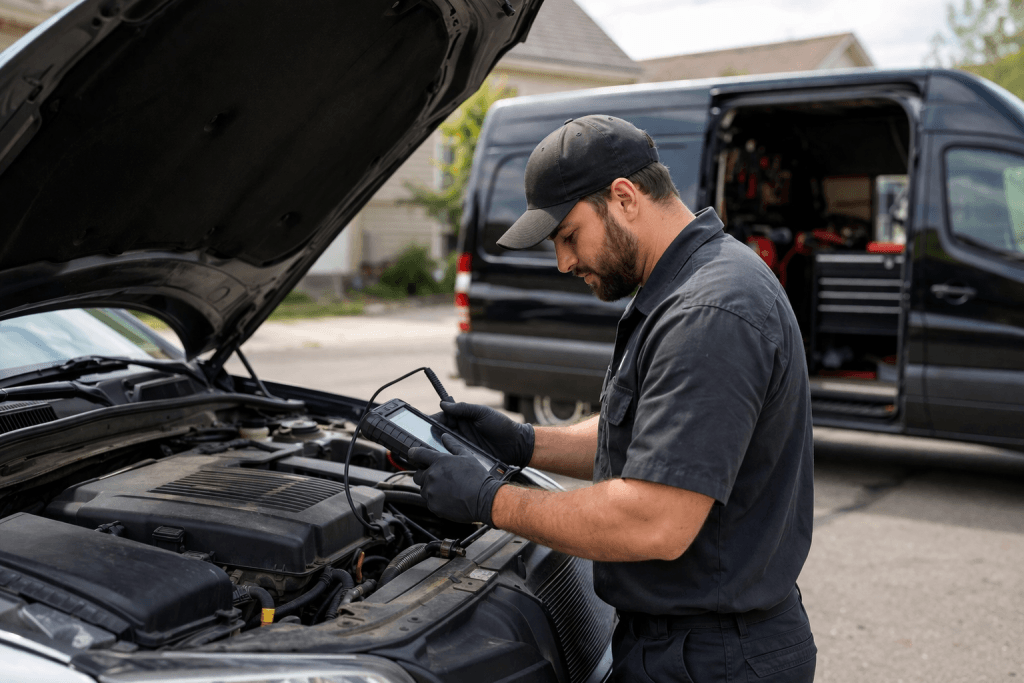
If your vehicle struggles to start during cold weather, a mobile mechanic can inspect the starting system at your location.
Typical diagnostics may include:
• Battery voltage testing
• Starter motor inspection
• Checking electrical connections
• Evaluating spark plugs and ignition components
• Inspecting fuel system performance
Identifying the cause of the problem helps ensure the correct repair is performed.
Tips to Prevent Cold Weather Starting Issues
There are several steps drivers can take to reduce the risk of starting problems during winter.
Maintaining the battery in good condition is one of the most important factors. Replacing older batteries before winter arrives can help prevent cold-weather failures.
Using engine oil designed for colder climates can also improve engine performance during startup. Parking in a garage or using a block heater may further help the engine start more easily in freezing conditions.
Routine vehicle inspections before winter can help identify potential problems early.
If your car struggles to start in cold weather, the issue may involve a weak battery, thickened engine oil, starter motor problems, fuel system issues, or worn spark plugs. Because cold temperatures place extra stress on vehicle systems, identifying and addressing these issues early can help prevent winter breakdowns.
Professional diagnostics can help determine the cause and ensure your vehicle remains reliable during cold weather.
Need Help With Cold Weather Starting Issues in Anchorage?
If your vehicle struggles to start during cold temperatures, professional inspection can identify the cause and restore reliable performance.
Mobile Mechanic in Anchorage, AK provides convenient on-site vehicle diagnostics and repair services throughout Anchorage.
Schedule service today to have your vehicle inspected and prepared for cold weather driving.