
There is a particular sound every Anchorage driver dreads. You turn the key or push the start button, and instead of your engine roaring to life, you get a slow, weak groan, or worse, nothing at all. If you have lived in Alaska for even one winter, you already know this is not rare. It is practically a rite of passage. Cold weather is brutal on vehicles, and understanding exactly why can save you from being stranded in a parking lot at negative fifteen degrees while everyone else drives past.
Why Cold Temperatures Attack Your Battery First
Your car battery relies on a chemical reaction to produce electricity, and that reaction slows down dramatically as temperatures drop. At around zero degrees Fahrenheit, a typical lead acid battery loses roughly half of its normal cranking power compared to how it performs at seventy degrees. Here in Anchorage, we regularly see temperatures far colder than that during the heart of winter, which means a battery that seemed perfectly fine in October can suddenly struggle to turn the engine over in January.
At the same time that your battery is producing less power, your engine oil is thickening in the cold, which means your starter has to work harder just to get the engine moving. You end up with a battery that has less to give and an engine that is demanding more from it. That combination is exactly why cold mornings expose weak batteries that seemed to have plenty of life left just a few weeks earlier.
The Starter Motor Takes a Beating Too
The starter motor itself is not immune to the cold either. Thickened oil and grease inside the engine and transmission create extra resistance, forcing the starter to draw significantly more current than it would in warmer conditions. Over time, this added strain wears down starter components faster, especially if a driver is already dealing with a marginal battery and repeatedly cranking the engine longer than usual to get it started. Every extra second of cranking in freezing weather adds wear that adds up over a winter season.
If you have noticed your starter clicking rapidly instead of turning the engine, or if the engine cranks slower and slower each time you try, that is often the starter and battery working together to tell you something is wrong before a complete failure leaves you stuck.
Fuel and Fluid Issues That Show Up Only In Winter
Batteries and starters get most of the attention, but they are not the only cold weather culprits. Condensation inside a fuel tank can freeze in fuel lines, especially in a vehicle that sits with a low tank overnight. Diesel vehicles face their own version of this problem when fuel begins to gel in extreme cold. Meanwhile, engine oil that has not been changed to a lower viscosity grade for winter can become thick enough to seriously slow down cranking speed, even with a perfectly healthy battery.
Alaska drivers who keep the same all season oil year round often do not realize how much easier a proper winter weight oil makes cold starts. It is a small and inexpensive change that reduces strain on both the starter and the battery every single morning.
Battery cables and connections deserve attention too. A small amount of corrosion that barely affects performance in summer can become a much bigger problem once the metal contracts in freezing temperatures, loosening the connection just enough to cause intermittent starting trouble. Drivers sometimes chase a phantom battery problem for weeks when the real issue was a corroded terminal or a slightly loose cable that only misbehaves once the cold sets in.
Signs Your Vehicle Needs Attention Before The Next Cold Snap
A few warning signs tend to show up in the days or weeks before a full failure. Slower than normal cranking, dimming headlights or interior lights when you try to start the car, a clicking sound instead of the engine turning over, and dashboard warning lights that flicker on and off are all signals worth taking seriously. Many drivers ignore these signs because the car eventually does start, but eventually is doing a lot of heavy lifting in that sentence. Cold snaps in Anchorage can drop temperatures another ten or twenty degrees overnight, and a battery that was barely making it at ten degrees may not make it at all once the mercury falls further.
If you have ever found yourself wondering exactly why does my car struggle to start in cold weather, that article goes deeper into the mechanical reasons behind sluggish starts and is worth a read if you want the full picture beyond battery and starter issues alone.
What You Can Do Right Now
The good news is that most cold weather starting failures are preventable with a bit of attention before winter fully sets in. Testing your battery’s cold cranking amps rating against what your vehicle actually needs is one of the most useful things an Anchorage driver can do each fall. A battery that tests fine in September can still be on its way out by December, so a proactive check matters more here than almost anywhere else in the country.
Keeping your battery terminals clean and free of corrosion, making sure your alternator is charging properly, and switching to the manufacturer recommended winter oil weight are all simple steps that make a real difference. It is also worth having someone check your battery’s actual age rather than relying on how it seems to be performing, since most batteries in this climate only last around three to four years before their capacity drops off enough to cause trouble on the coldest mornings. If your vehicle has a block heater, using it consistently on the coldest nights keeps your engine oil warmer and easier to turn over, which takes pressure off both your starter and your battery.
Why A Mobile Mechanic Makes Sense In Alaska Winters
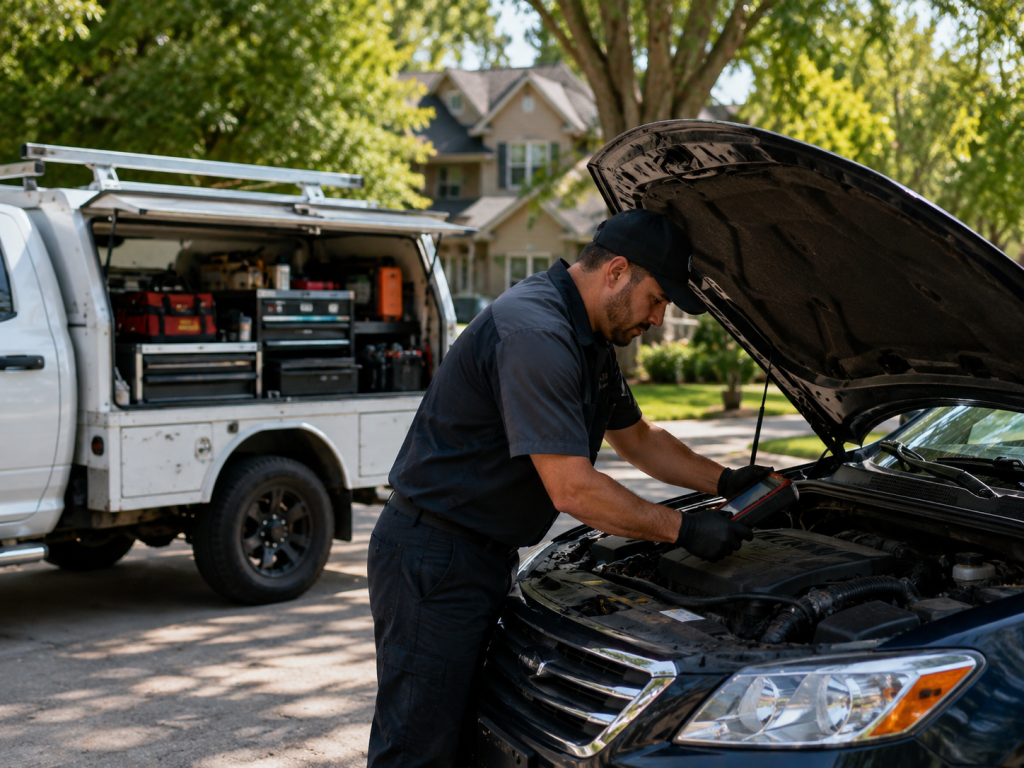
Driving to a shop when your car will not start is a bit of a contradiction, and towing a vehicle in Anchorage traffic during a snowstorm is nobody’s idea of a good time. This is one of the biggest reasons drivers here have shifted toward mobile service instead of waiting for an appointment at a traditional shop. A technician can come directly to your driveway, your office parking lot, or wherever your vehicle happens to be stuck, test the battery and starter on the spot, and get you back on the road without the hassle of arranging a tow in freezing conditions.
We put together a full comparison covering why mobile mechanics are better than traditional auto shops in Anchorage if you want to understand the practical differences, especially when it comes to winter reliability issues like the ones covered here.
Do Not Wait For The Coldest Morning Of The Year To Find Out
Alaska winters are not forgiving, and a car that struggles to start in October will almost certainly fail completely once the deep cold arrives in December and January. Getting your battery, starter, and fluids checked now rather than after a failed start on a subzero morning is one of the simplest ways to avoid being stranded when you can least afford it.
You can learn more about our services on our homepage, and if you are already noticing slow cranking, dimming lights, or a starter that hesitates, do not wait until it fails completely. Reach out through our contact us page and we will come to you, test your battery and starter on the spot, and get you ready for whatever the next cold snap brings.
A little attention before winter tightens its grip is always cheaper and easier than dealing with a dead battery on the coldest morning of the year.