
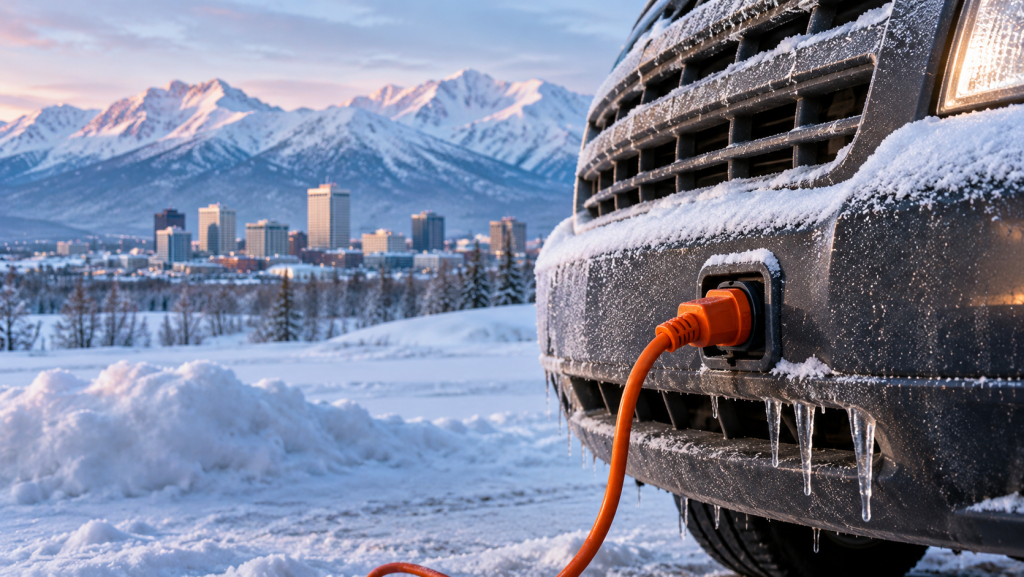
When the thermometer in Anchorage drops well below freezing, your car faces a tough start every single morning. Oil thickens, the battery loses power and the engine has to turn over in conditions it was never built to enjoy. An engine block heater is one of the simplest and most effective tools for easing that burden, and it is a familiar sight in Alaska: the cord poking out of a grille, the extension cord snaking across a driveway to an outlet. But many drivers are not sure how block heaters actually work, how long to leave them plugged in or how to tell when one has stopped working. This guide covers how block heaters work, when to plug in, how to use one safely and the signs that yours needs attention. If you are searching for a block heater guide for Anchorage or cold start help, this is a good place to begin.
What Is an Engine Block Heater?
An engine block heater is an electric heating element installed in or on the engine. When you plug it into a standard outlet, it warms the engine coolant, or sometimes the engine block or oil directly, depending on the design. The heater does not turn the engine into a hot, ready to go machine. Instead, it raises the temperature of the engine from deep cold to something more manageable, so the car starts more easily and warms up faster. Many vehicles sold in cold regions come equipped with one from the factory, while others can have one installed. Your owner’s manual will tell you whether your vehicle has a block heater and where the cord is located.
Why Cold Starts Are So Hard
Extreme cold causes several problems at once:
- Thick oil. Cold oil flows slowly, which makes the engine harder to turn and delays lubrication of moving parts at startup.
- Weak battery output. Cold slows the chemical reactions inside a battery, so it delivers less power just when the starter needs more.
- Poor fuel vaporization. Fuel does not vaporize as easily when it is very cold, which can make starting and early running rough.
- Extra wear. Many engine wear concerns come from the first moments after a cold start, when parts are not yet fully lubricated.
- Slow warm up. A cold engine takes longer to reach normal operating temperature, which means longer waits for cabin heat and defrost.
A block heater helps with many of these. By warming the engine before you start it, it makes the starter’s job easier, helps oil flow sooner and can shorten the time it takes for the engine and cabin to warm up.
How Block Heaters Work
The basic idea is simple. A heating element, powered by household electricity, warms the fluid or metal around it. In one common design, the element sits in the engine block in place of a freeze plug and heats the coolant, which then circulates by natural convection. Other designs attach to the oil pan or the engine in other ways, or heat coolant in a line. All of them aim to raise the engine temperature before you start the car.
It is worth knowing the limits. A block heater warms the engine, not the whole vehicle. It does not heat the cabin, and it does not replace a healthy battery or good winter oil. It works best as one piece of a complete cold weather plan.
When Should You Plug In?
The right timing depends on your vehicle, the heater and how cold it is. Your owner’s manual is the best source for guidance on your specific car. As a general idea:
- Plug in when temperatures are well below freezing, and especially during the coldest stretches of an Alaska winter. Many manuals suggest using the heater once temperatures drop below a certain point, so check yours.
- Give it time to work. A heater needs a period of time before it makes a real difference. Many drivers plug in a few hours before they plan to leave, but follow your manual for how long is right.
- You usually do not need to run it all night. Long run times may not add much benefit past a certain point and use more electricity. A simple outdoor rated timer can switch the heater on a few hours before you leave, which saves energy and effort.
- Use it more on the coldest days. On very cold mornings, a heater matters more. On mild days, you may not need it.
For more cold weather preparation, our car winterization FAQ for Anchorage answers many common questions about getting your vehicle ready for winter.
How to Use a Block Heater Safely
A block heater is an electrical device used outdoors in freezing conditions, so safety matters.
- Inspect the cord every time. Look for cracks, cuts, exposed wire or damaged plugs. A cord that is frayed or damaged should not be used. Have it replaced.
- Use a proper extension cord. Choose a cord rated for outdoor use and for the electrical load, and keep it as short as practical. A thin, damaged or indoor only cord can overheat or fail.
- Use a grounded outlet, ideally one protected by a ground fault circuit interrupter, if your setup allows.
- Keep connections dry. Snow, ice and moisture around plugs and connections are a hazard. Keep connections off the ground and protected as much as possible.
- Do not run the cord where it can be damaged. Keep it away from tires, hot exhaust parts, moving parts and areas where it might be driven over or pinched.
- Unplug before you drive. This is easy to forget. Driving away with the cord attached can damage the cord, the car or the outlet. Some drivers hang a reminder on the steering wheel or mirror.
- Do not overload circuits. Do not plug a heater into the same circuit as other high demand devices.
- Follow your owner’s manual, and have installation or repairs done by a qualified technician.
If you notice a burning smell, a hot plug, a tripped breaker or a melted cord, stop using the heater and have the system inspected before trying again.
Signs Your Block Heater Has Stopped Working
A block heater is easy to forget until it fails. Here are some clues that yours may not be doing its job:
- The engine is just as hard to start, even after plugging in for several hours.
- It takes as long as ever to warm up, and the cabin heat is slow to arrive.
- The breaker trips or the outlet cuts out when you plug in.
- The cord or plug is damaged, with cracks, burn marks, bent prongs or discoloration.
- You do not feel any warmth. On some vehicles, you may be able to tell whether the area near the heater is warmer after it has been running, though you should be careful around hot components.
- Coolant leaks near the heater. A puddle or residue near the block or a low coolant level can point to a failed heater seal or a leak at the heater location.
- Your electric bill or outlet shows unusual behavior, such as a heater that seems to draw no power at all.
A test with a meter can show whether the heater element and cord are working. A technician can do this quickly and safely. Do not attempt electrical repairs yourself unless you are qualified.
Other Cold Start Helpers
A block heater is not the only way to improve cold weather starting. Depending on your vehicle, these can help too:
- A healthy battery. Have your battery tested before winter, since it is one of the most common causes of cold start trouble.
- The right oil. Use the oil grade recommended in your owner’s manual for cold conditions.
- Battery or oil pan heaters. Some drivers use additional heating devices. Ask a technician about options for your vehicle.
- A garage or carport. Sheltered parking takes the edge off the cold.
- A fuel tank that is at least half full, which helps with fuel system reliability in winter.
- Clean battery terminals and good cables. Corrosion makes cold starts harder.
- Healthy spark plugs and ignition parts, where applicable.
Cold Start Problems: What to Check
If your car struggles to start in the cold even when the block heater is plugged in, there could be another cause. Common culprits include a weak battery, corroded connections, a worn starter, old spark plugs, fuel issues or an oil grade that is too thick for the temperature. A technician can test each possibility rather than guessing. Do not keep cranking a car that will not start, since that can drain the battery and strain the starter. Give it a break and call for help if needed.
How a Mobile Mechanic Can Help in an Alaska Winter
Dealing with a car that will not start at 20 below is miserable, and a trip to a shop is not always an option when the car cannot move. A mobile mechanic can come to your home or workplace to check the block heater, test the cord and heater element, inspect the battery and charging system and look for other causes of cold start trouble. Many of these checks can be done where the car is parked. If a heater needs to be replaced and the job requires specialized equipment or a heated shop space, a good technician will tell you honestly whether a shop visit is needed. To learn more about why many drivers prefer on site service, read our post on why mobile mechanics are better than traditional auto shops in Anchorage.
Quick Block Heater Checklist
- Check your owner’s manual for the heater location and recommended use.
- Inspect the cord and plug for damage before every use.
- Use an outdoor rated extension cord and keep connections dry.
- Plug in a few hours before you leave on very cold days, or use a timer.
- Always unplug before driving away.
- Watch for hard starting, tripped breakers and coolant leaks.
- Have the battery and charging system tested before winter.
- Get the heater tested if you suspect a problem.
A working block heater makes Alaska mornings far easier on you and your engine. If you want to make sure yours is ready for the cold, visit our homepage to learn more, or contact us to schedule a visit.